Why we built NoodleTon
Most kids' apps fall into one of two traps.
The first is the endless reward loop — bright colors, a coin sound on every tap, a streak counter that never runs out — engineered to maximize time-in-app, with the actual learning as an afterthought. The second is the opposite problem: a stack of digital flashcards, technically educational, but so dry that a child does it because they're told to, not because they want to.
We wanted a third thing: games built around why a skill is hard for a young child in the first place, not just what the skill is called.
That distinction shows up everywhere in the design. A memory game isn't just "match the pairs" — the grid size and reveal timing follow how working memory capacity actually grows over early childhood. A "sustained attention" game doesn't just get faster each level — it makes the target rarer, because that's the specific lever that makes staying ready harder, the same lever attention researchers use. A movement break isn't just "jump around for a minute" — it mixes in a rule to remember ("hop three times, then freeze"), because research on classroom brain breaks shows movement paired with a thinking demand does more for a child's ability to refocus than movement alone.
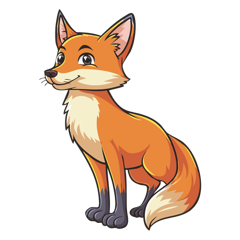
None of that is visible to a four-year-old, and it shouldn't be — to them, it's just a fox who needs help hopping across lily pads. But it's why we could write a whole page explaining the reasoning behind every corner of the app, instead of a page of marketing adjectives.
The other half of "built differently" is what we chose not to do. No behavioral advertising. No third-party analytics quietly profiling a five-year-old's taps. Your child never creates an account, logs in, or types a real name anywhere in the app — the one account that exists is the parent's, used only to manage the subscription. Not because regulation requires it (though it helps), but because a five-year-old's data has no business being a product.
We'd rather build something we'd actually hand to our own kid, unsupervised for twenty minutes, without a second thought. That's the bar.